
Introduction
Your first Reiki attunement is often described as one of the most memorable moments of the entire learning journey — but it’s also one of the most misunderstood. Not knowing what to expect can create unnecessary nervousness. Here’s a clear, honest breakdown of the process.
What an Attunement Actually Is
An attunement is a guided energetic process performed by a Reiki master, designed to open and align the student’s energy channels to practice Reiki healing. It’s considered the core transmission that distinguishes formal Reiki training from simply learning about it.
Before the Attunement: How to Prepare
- Come with an open, relaxed mindset rather than heavy expectations
- Avoid heavy meals immediately beforehand for physical comfort
- Wear comfortable clothing you can sit calmly in for an extended period
- Set a simple, personal intention for your Reiki journey
During the Attunement: What Typically Happens
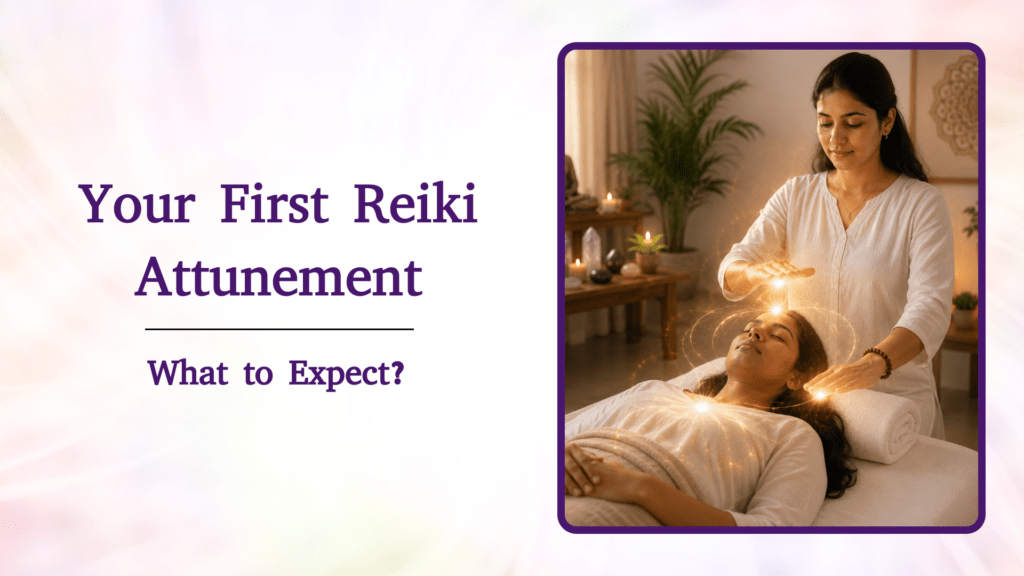
You’ll typically sit comfortably with eyes closed while the teacher performs a series of guided energetic steps, often involving specific hand placements and symbolic gestures near the crown, hands, and heart area. Sessions usually last a short, focused period rather than an extended ritual.
Common Sensations Students Report
Sensation | What It Might Feel Like |
Warmth | Gentle heat in the hands, chest, or crown |
Tingling | Light energetic buzzing sensation |
Emotional release | Unexpected feelings of calm, tears, or lightness |
Deep relaxation | A meditative, floaty sense of stillness |
No noticeable sensation | Some students feel little immediately — equally normal |
After the Attunement: What Comes Next
It’s common to feel emotionally sensitive, tired, or unusually reflective in the hours or days following an attunement. Teachers typically guide students through a 21-day self-practice period to integrate the energy and build consistency.
It’s Completely Normal to Feel Nothing Dramatic
Not every student has an intense, visible experience, and that doesn’t mean the attunement didn’t work. Reiki sensitivity often develops and deepens with consistent practice over time.
Aatmbodh’s Reiki Course in Pune includes structured guidance through this entire process, so no student navigates their first attunement alone or unprepared.
Key Takeaways
- An attunement is a guided energetic process that opens a student’s ability to practice Reiki.
- Coming with an open, relaxed mindset improves the overall experience.
- Common sensations include warmth, tingling, or emotional release, though experiences vary widely.
- Feeling little or nothing immediately is completely normal and not a sign of failure.
- A structured self-practice period after attunement helps integrate and deepen the experience.
Frequently Asked Questions
How long does a Reiki attunement typically take?
Most attunements take a relatively short, focused amount of time within a larger training session, though exact duration varies by teacher and level.
Is it normal to feel nothing during my first attunement?
Yes, sensitivity to energy varies by individual and often develops further with consistent practice over time.
Can attunements cause any negative side effects?
Some students report temporary emotional sensitivity or tiredness afterward, which is generally considered a normal part of energetic integration.
Do I need to do anything special after my attunement?
Many teachers recommend a structured self-practice period, often around 21 days, to help integrate and strengthen the experience.
Can I get attuned more than once if I don’t feel a strong effect?
This varies by teacher and tradition; discussing your experience openly with your Reiki master is the best first step.
Conclusion
Your first Reiki attunement doesn’t need to be a source of anxiety — understanding what to realistically expect makes the experience far more grounding and meaningful.
Ready to experience a structured, supportive first attunement? Explore Aatmbodh’s Reiki Course in Pune or reach out with any questions.