Introduction
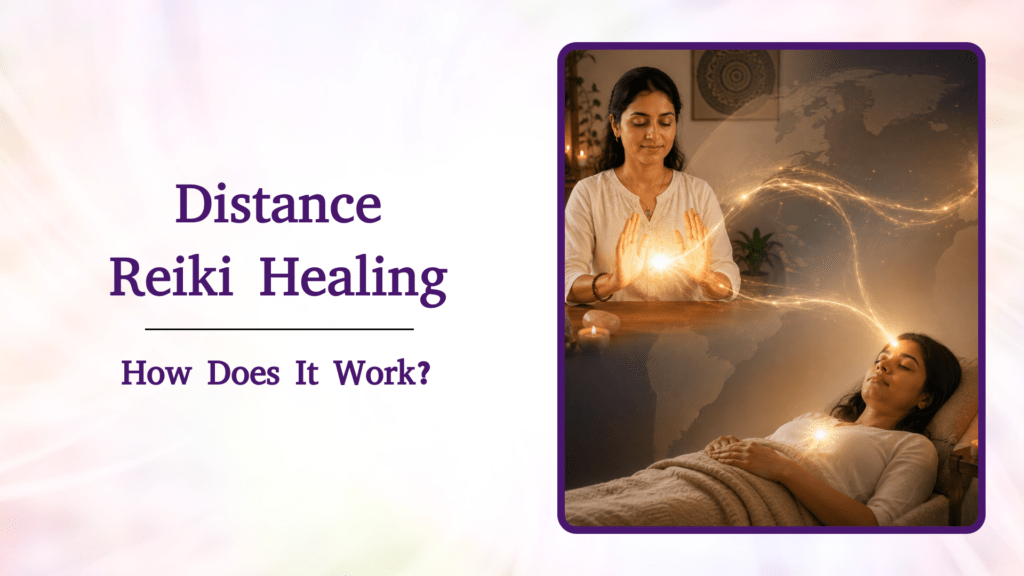
The idea of healing someone who isn’t physically in the room understandably raises questions. Distance Reiki healing is one of the most curiosity-inducing aspects of the practice — and also one of the most misunderstood. Here’s a clear explanation of how it’s traditionally taught and practiced.
The Core Principle Behind Distance Reiki
Reiki is taught as a form of universal life energy that isn’t bound by physical space or time. This principle, rooted in traditional Reiki teachings, is the foundation that makes distance healing techniques possible within the practice.
The Role of Distance Healing Symbols
Reiki Level 2 training traditionally introduces specific symbols, including one specifically associated with distance healing. Practitioners use these symbols alongside focused intention to direct healing energy toward a person, situation, or even a past or future moment.
How a Typical Distance Reiki Session Works
- The practitioner sets a clear, focused healing intention for the recipient
- Distance symbols are used to establish an energetic connection
- The recipient is often (though not always) resting quietly during the session
- Sessions typically last a similar duration to in-person treatments
- Some practitioners use a photo or written name as a focal point for connection
What Recipients Commonly Report
Many recipients describe sensations similar to in-person Reiki — warmth, relaxation, or emotional release — even without any physical contact or proximity to the practitioner.
Addressing the Skepticism Honestly
Distance healing isn’t scientifically proven in the conventional medical sense, and reputable practitioners are upfront about this. It’s best understood and offered as a complementary wellness practice, valued by many for relaxation and emotional support alongside standard care.
Is Distance Reiki Right for You?
Distance Reiki can be a practical option for those unable to attend in-person sessions, living far from a practitioner, or simply curious to try Reiki without geographic limitations.
Aatmbodh’s healing services include remote healing options guided by experienced practitioners for those exploring this path.
Key Takeaways
- Distance Reiki is grounded in the traditional principle that energy isn’t limited by physical space.
- Specific symbols taught in Level 2 training are traditionally used for distance healing work.
- Recipients often report sensations similar to in-person sessions despite physical distance.
- Distance Reiki is best approached as a complementary wellness practice, not a medical treatment.
- It offers a practical option for those unable to access in-person sessions.
Frequently Asked Questions
Do I need to be present or aware during a distance Reiki session?
No, many recipients simply go about their day or rest quietly, though being relaxed and receptive is often recommended.
How is a person or situation targeted in distance healing?
Practitioners typically use a name, photo, or written intention alongside specific symbols to establish a focused energetic connection.
Is distance Reiki less effective than in-person sessions?
Practitioners generally consider distance and in-person Reiki equally valid, since the practice is understood as energy-based rather than physically dependent.
Can distance Reiki be sent to someone without their knowledge?
Ethical practice generally requires the recipient’s consent, similar to any other healing or wellness service.
How do I know if distance Reiki is working?
Some recipients notice immediate sensations, while others notice gradual shifts in mood or relaxation over time — both are considered normal.
Conclusion
Distance Reiki healing isn’t a modern shortcut — it’s rooted in traditional teachings that understand energy as unbound by physical space. Whether experienced firsthand or learned as a practitioner, it remains one of Reiki’s most fascinating dimensions.
Curious to experience or learn distance healing yourself? Explore Aatmbodh’s healing services or get in touch to learn more.